Showing posts with label Thai. Show all posts

11 March 2010

Green Papaya Salad - Som Tum Thai

Green Papaya Salad or Som Tum Thai consists of mainly dried shrimp, peanuts, cherry tomatoes and of course green papaya. Snake beans are also added, but I didn't have any on hand. But the reason why green papaya salad is one of my favourite Thai dishes is the dressing that ties all the ingredients together. Its a combination of smashed garlic and chilli with fish sauce, lime juice and palm sugar. The end result is a salad that tastes equally sweet, sour and spicy....which I find really addictive. :)

Its the palm sugar that makes all the difference. I've tried substituting with white sugar before, but it just didn't taste the same.

I also prefer to pound up the dried shrimp until its light and fluffy. I'm not really a fan of munching on small bits of harden dried shrimp. Also P usually avoids anything that resembles the shape of a prawn, but with the shrimp pounded, its all good. Its not like he doesn't know I'm slipping shrimps into the dish, he is the one pounding it.

This is a salad you can just have on its own, or as an side dish with other red meats or seafood. I like to serve it on top of a whole Snapper or any other white fish that has been pan fried until the skin is crispy. The tanginess and spices from the salad transforms the simple pan fried fish into a totally different dish.

Green Papaya Salad - Som Tum Thai
Recipe adapted from Chez Pim's Green Beans Salad
  • 1 tablespoon Dried Shrimp
  • 1 1/2 Cups Shredded Green Papaya
  • 2 cloves Garlic
  • 1 Thai Bird Chilli
  • 1 tablespoon Roasted Peanuts
  • 8-10 Cherry Tomatoes (about a handful - big ones sliced into halves)
  • 2 tablespoons Palm Sugar
  • Juice of 1 lime
  • 2 tablespoon Fish Sauce
  • 4 Long Beans (Cut into 1/2" Lengths) - Optional

Method:
  1. Slice Green Papaya into fine strips and place into a glass or ceramic bowl
  2. In a mortar, pound and grind the dried shrimps until they turn into fluffy flakes, remove from the mortar and set aside.
  3. Gently mash up the garlic cloves in the mortar, then add the chilli and continue to grind until its turned into a chilli\garlic paste.
  4. Add in the tomatoes and gently press down on them to burst and bruise the cherry tomatoes.
  5. Add in the peanuts and pound them with the pestle until the peanuts are lightly crushed.
  6. Using a spoon, remove the mixture from the mortar and place into the bowl with the green papaya strips
  7. Add the palm sugar into the mortar and grind into a thick paste, remove from the mortar and mix into the bowl of papaya.
  8. To the bowl, add fish sauce and fresh lime juice and continue to stir until the contents are well mixed.
  9. Pour in the reserved shrimp flakes, stir and toss well to combine.
  10. Taste to check the seasonings, add palm sugar, lime juice or fish sauce as needed.


Notes:
  • If you only have blanched peanuts, just lightly toast them in a dry pan prior to using.


14 January 2010

Pork Satay with Peanut Sauce - Daring Cooks Challenge

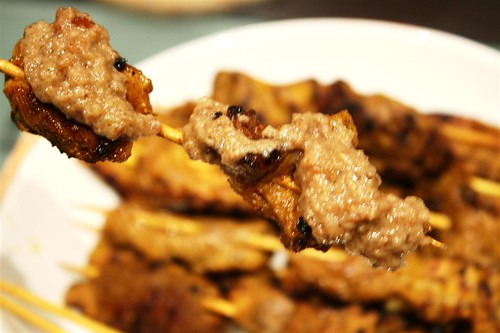
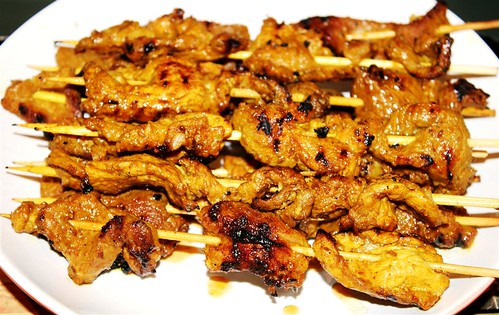
The Daring Cooks Challenge for January was hosted by Cuppy of Cuppylicious. The recipe she choose was a Thai-inspired Pork Satay from the book 1000 Recipes by Martha Day. The focus of the challenge was with marinating the meat. There was a long and short version for marinating, and I choose to do the long version. Here are the guideliness she set for the challenge:
  1. Use any meat or tofu you like.
  2. Serve satay as an appetizer, side dish or main course.
  3. Skewer or no skewer, your call.
  4. Pan fry, grill, or broil, also your call.
  5. Alternative recipe below for faster marinade.
  6. Alternative recipe below for peanut allergies.
  7. You don’t have to use turmeric if you don’t have it. In the case of satay, turmeric just makes it yellow. Har har.
  8. Marinate (verb) – to steep (to wet thoroughly in or with a liquid; drench; saturate; imbue) in a marinade before cooking.
    The required part of this challenge is to marinate. Marinades serve two purposes, to: 1) add awesome flavor and 2) tenderize tougher meats.

What I like to do is take tougher (cheaper!) cuts of meat and marinate them to make them soft and tender. The tougher the meat, the cheaper it seems to be. Think of it as “what part of the animal gets the most exercise?” and you’ll know which parts are the tough (cheaper!) cuts. Anything from the back and belly tends to be pretty tender already, as it gets very little exercise on the animal (haha… I just patted my own belly thinking about that!).

Meat cuts:
http://www.specialtyfoods.com.au/cuts.html

The key to a great marinade is to have an acid (lemon, lime, brine, soy, vinegar, etc) and an oil (peanut, vegetable, corn, olive, etc). If you’re already working with a soft meat (filet mignon) or vegetable (capsicum) or tofu, then you can skip the oil entirely. Potatoes and tofu still need to be marinated for flavor, otherwise you may as well dip French fries in catsup. If you're going to grill, I suggest you include the oil anyway.

Marinade Info:
http://www.bbqrecipesecrets.com/marinades.html

Things you’ll need for the long version:
Sharp knife
Cutting board
Food processor (optional)
Juicer (optional)
Medium bowl w/ lid or plastic wrap (or ziplock bag)


I used Pork Neck instead of the recommended shoulder or loin cuts. Just because I happen to have about 300g of it left in my freezer. Also I guess fattier pork equals yummier satays.. :)

pork_satay2


Pork Satay with Peanut Sauce

Satay Marinade

  • 1/2 small onion, chopped
  • 2 garlic cloves, crushed
  • 1 T ginger root, chopped (optional) (2 cm cubed)
  • 2 T lemon juice (1 oz or 30 mls)
  • 1 T soy sauce (0.5 oz or 15 mls)
  • 1 tsp ground coriander (5 mls)
  • 1 tsp ground cumin (5 mls)
  • 1/2 tsp ground turmeric (2-2.5 mls)
  • 2 T vegetable oil (or peanut or olive oil) (30 mls)
  • 1 pound of pork (loin or shoulder cuts) (16 oz or 450g)

Feeling the need to make it more Thai? Try adding a dragon chili, an extra tablespoon of ginger root, and 1 tablespoon (0.5 oz or 15 mls) of fish sauce. (I keep some premature (still green) dragon chili peppers in the freezer for just such an occasion.)

Directions:

  1. Cheater alert: If you have a food processor or blender, dump in everything except the pork and blend until smooth. Lacking a food processor, I prefer to chop my onions, garlic and ginger really fine then mix it all together in a medium to large bowl.
  2. Cut pork into 1 inch strips.
  3. Cover pork with marinade. You can place the pork into a bowl, cover/seal and chill, or place the whole lot of it into a ziplock bag, seal and chill.
  4. Cooking Directions (continued): If using wooden or bamboo skewers, soak your skewers in warm water for at least 20 minutes before preparing skewers.
  5. Gently and slowly slide meat strips onto skewers. Discard leftover marinade.*
  6. Broil or grill at 290°C/550° F (or pan fry on medium-high) for 8-10 minutes or until the edges just start to char. Flip and cook another 8-10 minutes.

    * If you’re grilling or broiling, you could definitely brush once with extra marinade when you flip the skewers.

pork_satay1 (Large)


Peanut Sauce

  • 3/4 cup coconut milk (6 oz or 180 mls)
  • 4 Tbsp peanut butter (2 oz or 60 mls) **
  • 1 Tbsp lemon juice (0.5 oz or 15 mls)
  • 1 Tbsp soy sauce (0.5 oz or 15 mls)
  • 1 tsp brown sugar (5 mls)
  • 1/2 tsp ground cumin (2.5 mls)
  • 1/2 tsp ground coriander (2.5 mls)
  • 1-2 dried red chilies, chopped (keep the seeds for heat)

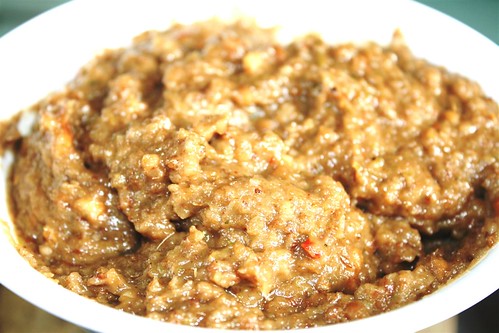
** I didn't have any peanut butter, so added in a handful of crushed peanuts instead.

  1. Mix dry ingredients in a small bowl. Add soy sauce and lemon, mix well.
  2. Over low heat, combine coconut milk, peanut butter and your soy-lemon-seasoning mix. Mix well, stir often.
  3. All you’re doing is melting the peanut butter, so make your peanut sauce after you’ve made everything else in your meal, or make ahead of time and reheat.
satay_sauce2 (Large)

Pepper Dip (optional)

  • 4 tablespoon soy sauce (2 oz or 60 mls)
  • 1 tablespoon lemon juice (0.5 oz or 15 mls)
  • 1 teaspoon brown sugar (5 mls)
  • 1-2 dried red chilies, chopped (keep the seeds for heat)
  • 1 finely chopped green onion (scallion)
Mix well. Serve chilled or room temperature.

Tamarind Dip (optional)
  • 4 tablespoon tamarind paste (helpful link below) (2 oz or 60 mls)
  • 1 tablespoon soy sauce (0.5 oz or 15 mls)
  • 1 clove of garlic, minced
  • 1 finely chopped green onion (scallion)
  • 1 teaspoon brown or white sugar, or to taste (about 5 mls)

Mix well. Serve chilled or room temperature.

Thank you Cuppy for the challenge !

08 January 2010

Thai Style Cucumber Relish

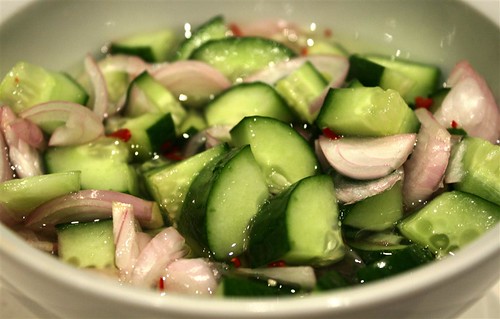
Work has been pretty busy for the past week. So by the time I get home, the only thing I could really put together were some quick dishes to have with some steam rice with either roast chicken or duck from the shops.

This recipe is really easy and quick to make and goes well as an accompliment to roast duck, deep fried chicken wings, thai fish cakes and thai-styled satays.

Thai Style Cucumber Relish
recipe adapted from David Thompson's Book - Thai Street Food
  • 1/4 cup white sugar
  • 1/4 cup white vinegar
  • 1/4 cup water
  • pinch of salt
  • 1 cucumber (quartered & sliced)
  • 4 red shallots (finely sliced)
  • 1/4 red chilli (chopped)
  • 2 tablespoons Coriander (chopped)
Method:
  1. Simmer the sugar, vinegar, salt and 1/4 cup of water. When the sugar has dissolved, take off the heat and allow to cool.
  2. Put the cucumber, chilli, shallots and coriander into a bowl. Mix together with the sugar & vinegar solution and serve as an accompliment for satays or Thai fish cake.

cucumber relish (Large)

15 September 2009

Thai Cucumber Salad - Yum Tang Gwa

My lovely cousin is in town this week. While we were out at dinner last night, we were talking about the things she missed most while working abroad. A nice home-cooked meal was something that was mentioned. So I asked her what type of food did she feel like having and if she was free to come over to dinner tonight. She replied .. "Yes... Thai food please".

Darn.. She picked the one cuisine that we probably make the least at home.

Cantonese, Italian, Steak, Casseroles and Japanese type cuisine dishes would be what we usually stick with.

But, alas.. Thai it was. I opted for my Thai Chilli Mussels (just because it was a work day, and its simple enough to whip up in a flash), I did add more liquid and coconut cream so it also doubled as a soup. I made a pot of Green Curry Chicken (full recipe to come later) and a Thai Cucumber Salad as a side dish to help offset the fullness of the coconut milk in the other dishes.

This is based on a recipe I found on Chez Pim's site. I changed it slightly to just stir frying the shallots and sprinkling in some already fried shallots I had in my pantry instead. I also drained some of the water out of the cucumber by tossing some salt through it. And added some lime zest to give it a bit more zing. :)


Thai cucumber salad - Yum Tang Gwa
Original recipe from Chez Pim - Thai Cucumber Salad

  • 2 large cucumbers (peeled then sliced thinly)
  • 1/2 teaspoon salt
  • 1/4 cup of mint (roughly ripped by hand)
  • 1/4 cup of basil leaves (roughly ripped by hand)
  • 1/4 cup coriander leaves
  • 1 cup of shallots (thinly sliced)
  • 2 tablespoons desiccated coconut
  • sprinkle of dried fried shallots

For the dressing

  • 1/4 cup fish sauce
  • 3 tablespoons lime juice
  • Grated lime zest of 1 lime
  • 2 tablespoon rice vinegar
  • 2 tablespoon of palm sugar
  • 2 red chillies (finely chopped) <-- You can add more if you like.

Method:

  1. Peel and cut the cucumbers into thin slices.
  2. Toss the cucumber in some salt, and let stand for 30 mins or so in a colander.
  3. Place a pan over low heat, add the coconut flakes and stir constantly until they are evenly brown. Set aside.
  4. Wipe the pan clean, add some oil into it and place it over medium heat. When the oil is hot, add the shallot slices and stir fry, stirring occasionally, until it starts to turn golden brown. Remove from the pan and set aside.
  5. To make the dressing, first you nuke the palm sugar (in a bowl in the microwave) for 20-30 seconds just to melt it and make it easier to blend with the other ingredients. Then add the fish sauce, stir to blend. Add the lime juice, zest, then the rice vinegar. Taste it and see if you need more acidity, if so, add more rice vinegar to taste. Add the chopped chilli
  6. In a salad bowl, add the cucumber slices. Reserve a bit of the coconut, and the herbs for garnish. Dump the rest into the salad bowl. Pour in about 2/3 of the dressing, toss well.
  7. Taste it and see if you'd like a bit more dressing, then add more as needed. Sprinkle with the fried shallots, coconut, and herbs and serve.

Notes:

  • Due to time constraints, I didn't bother with deseeding the cucumber before slicing it. In retrospect, the next time I make this again, I will probably take the time to deseed the cucumber.

25 July 2009

Thai Red Curry

I'm not a big fan of using pre-made pastes or sauces. Firstly, because of the presence of preservatives and additional colourings usually found in these pre-made sauces. Secondly, because of the amount of MSG present.

MSG = Monosodium Glutamate => very dry mouth => red skin rash => :((((

Making Thai red curry from scratch isn't actually that time consuming. The paste base can actually be done beforehand and kept in the fridge in an airtight container for up to two weeks, or in the freezer for up to 3 months. The red curry paste can be paired with beef, chicken, most seafoods and vegetables. You can use a pestle mortar to make the paste, but I take it as a sign for me to put my Magimix food processor to good use.

Red Curry Base Spice Paste:

  • 5 dried red chillies
  • 5 cloves garlic
  • 5 shallots (Try to get the small redish\purple coloured shallots)
  • 1 thumbsize piece galangal (thinly sliced)
  • 1 stalk lemongrass (use the bottom 10cm, inner white part - smashed, then thinly sliced)
  • zest of 1 lime (grated)
  • 3 Coriander stalks (bottom ~5cm of stalks)
  • 1 tablespoon coriander seed
  • 1 teaspoon cardamon seeds (seeds removed from husks)
  • 1 teaspoon cumin seed
  • 1 teaspoon white peppercorns (black peppercorns can be substituted)
  • 1 teaspoon Shrimp paste (Thai version preferred)

Over a hot pan, lightly toss and toast together the coriander seeds, cardamon, cumin and peppercorns until the aroma is released. This step also helps to bring out the flavours in the spices.

Pour all the ingredients into the food processor and pulse until everything has broken down and blended together. This should make enough base paste for about 5-6 serves. With about 2 tablespoons used per red curry. When using the spice paste, just fry in equal amount of peanut oil to release the flavour.

It does look like a lot of difference spices and ingredients are being used. But once you are able to source all the ingredients, the cooking part is actually quite easy. Thai curry is different to cooking other curries, where you don't actually need to simmer the curry over a long period of time (atleast I don't find that I need to).

I still like to add more fresh lemongrass, shallots and galangal to the curry on top of the spice paste. I also find that with my red curry, I usually end up with a curry that has a lot more vegetables present than meat. I also tend to like eating the vegetables more as it tends to absorb the flavours of the spice and curry sauce better.

Red Curry Chicken with Mix Vegetables

  • 2 tablespoons peanut oil
  • 2 tablespoon red curry paste
  • 3 shallots (chopped into quarters)
  • 3 whole dried chillies (optional - use less if you prefer a milder curry)
  • 1 stalk lemongrass (thinly sliced diagonally)
  • 1 thumbsize galangal (thinly sliced)
  • 5 kaffir lime leaves (torn in half)
  • Mix vegetables - see section below...
  • sawtooth coriander (if substituting with chinese coriander add this around the end)
  • 500g coconut milk
  • 300g chicken thigh meat (skin removed, sliced into strips)
  • 3 tablespoons fish sauce
  • 1 tablespoon palm sugar
  • juice 1 lime (kaffir lime preferred)

Mix vegetables - I usually add in a selection of the following (about a handful each):

  • canned longan fruit <-- used to enhance the sweetness in the curry
  • Thai green round eggplant (preferred, but purple eggplant can be substituted)
  • Okra (a.k.a Ladies fingers)
  • canned bamboo shoots
  • fresh oyster mushrooms
  • zucchini (sliced in chunks)

This list is a guide only, you can use any types of vegetables that you may have available. The veggies in the list are also what I've found to soak up the curry sauce better.

The canned longan fruit is easily sourced from any supermarket. Try to get the non-sweetened syrup version. The sweetness in the longan fruit actually helps soften the hotness of the chilli in the curry.

Method:

  1. In a medium-hot wok, add peanut oil then the two tablespoons of the previously prepared red curry spice mix. Fry the spice paste for a couple of seconds, then add in the chopped shallots, dry chilli, lemongrass, galangal, kaffir lime leaves.
  2. Add in the mixed vegetables & sawtooth coriander. Stirfry the veggies around with the spice paste and the other fresh spices for about a minute. The veggies are added in earlier to try to soften them first, as they do require to be cooked longer than the chicken.
  3. Pour in the coconut milk. Stir the contents around, making sure the coconut milk has combined with the spice paste. Bring up the heat until the coconut milk starts to simmer.
  4. Add in the chicken strips. Season with fish sauce and the palm sugar. Keep the curry on a slow simmer. Keep stirring the curry around, make sure the chicken pieces has cooked.
  5. Squeeze in the juice of one lime.
  6. Taste the curry, if its not salty enough, add in more fish sauce. If its not sour enough then add in more lime juice. If its too sour, then add in more palm sugar.
  7. Let simmer for a couple more minutes then serve with some steam rice.


Notes:

  • If using Okra (Ladies fingers), make sure they have cooked thoroughly.
  • Sawtooth coriander is a Thai style herb. Chinese coriander can be used instead. Put these in at the end, if you are using chinese coriander.

19 April 2009

Thai Style Chilli Mussels

This is a different take on my usual tomato, basil with white wine sauce based chilli mussels. This Thai style broth is actually based on a recipe I use to make Thai coconut milk and chicken soup - Tom Ka Kai. The method of cooking and ingredients used does change a bit, and the chicken is substituted with the mussels.

Try to buy the small black mussels and not the big green lip mussels.

Thai Style Chilli Mussels

  • 1 tablespoon peanut oil
  • 5 shallots (quartered)
  • 5cm piece fresh Galangal (thinly sliced)
  • 1 stalk of lemongrass (sliced diagonally)
  • 5 Kaffir lime leaves (torn in 1/2 down the spine)
  • 3 whole dried chillies
  • 1 fresh chilli (sliced diagonally)
  • 1 cup coconut milk
  • 3cm piece palm sugar
  • 2 tablespoons fish sauce
  • 1 kg mussels (scrubbed clean and debearded)
  • 1/2 cup of fresh Coriander (leaves - roughly chopped)
  • Juice from 1 kaffir lime

Method:

  1. In a large wok, heat up the peanut oil and add in shallots, galangal, lemongrass and kaffir lime leaves. Stirfry the spices around for a about a minute.
  2. Add in the chillies then the coconut milk. Turn up the heat on the wok and bring the broth to boil, then reduce the heat down to a slow simmer.
  3. Add in palm sugar and fish sauce.
  4. Add in the cleaned mussels, place a lid on the wok, and let the mussels 'steam' and cook in the coconut milk broth.
  5. Remove the lid as the mussels start to open. The mussels should cook in about 3 mins.
  6. Add in the coriander leaves and squeeze in a the juice from 1 lime.
  7. Stir the contents in the wok around and make sure everything combined and the sauce gets into the opened mussels.
  8. Taste the broth. Add fish sauce if its not salty enough, more sugar if its too sour and more lime juice if its not sour enough.
  9. Serve immediately with rice or with some warm bread to soak up the broth.

Notes:

  • If you don't have any fresh limes, you can use 1 teaspoon of tamarind pulp (diluted with a bit of water) as a substitute.
  • Discard any unopened mussels.
  • Try not to overcook the mussels. 3 mins is all that is needed for the steaming process. Overcooked mussels tend to shrink and become chewy.

Related Posts with Thumbnails